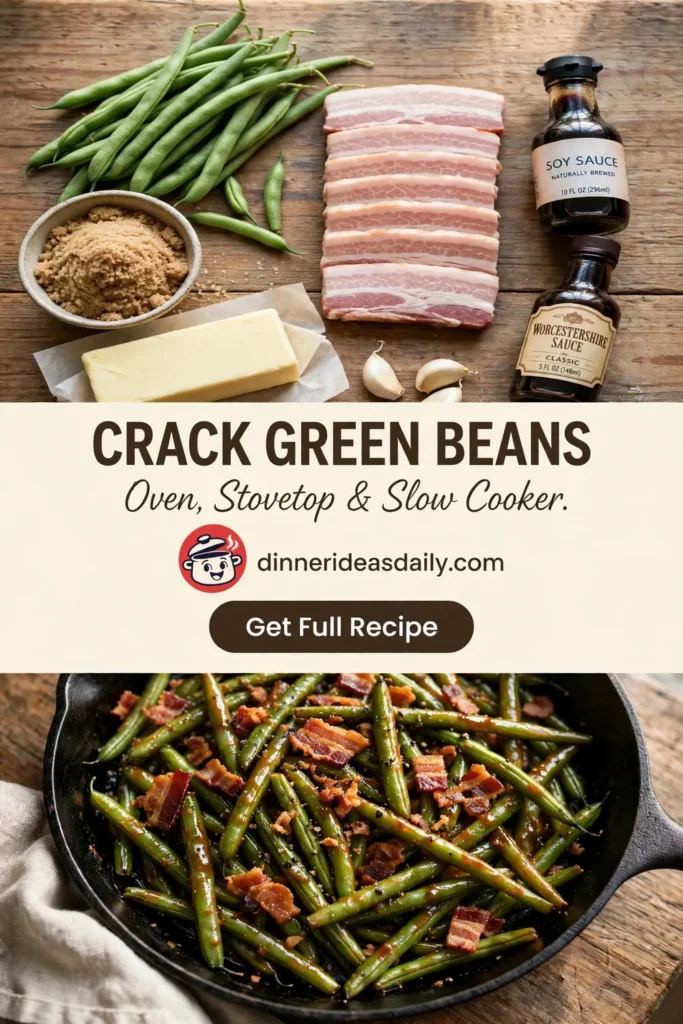
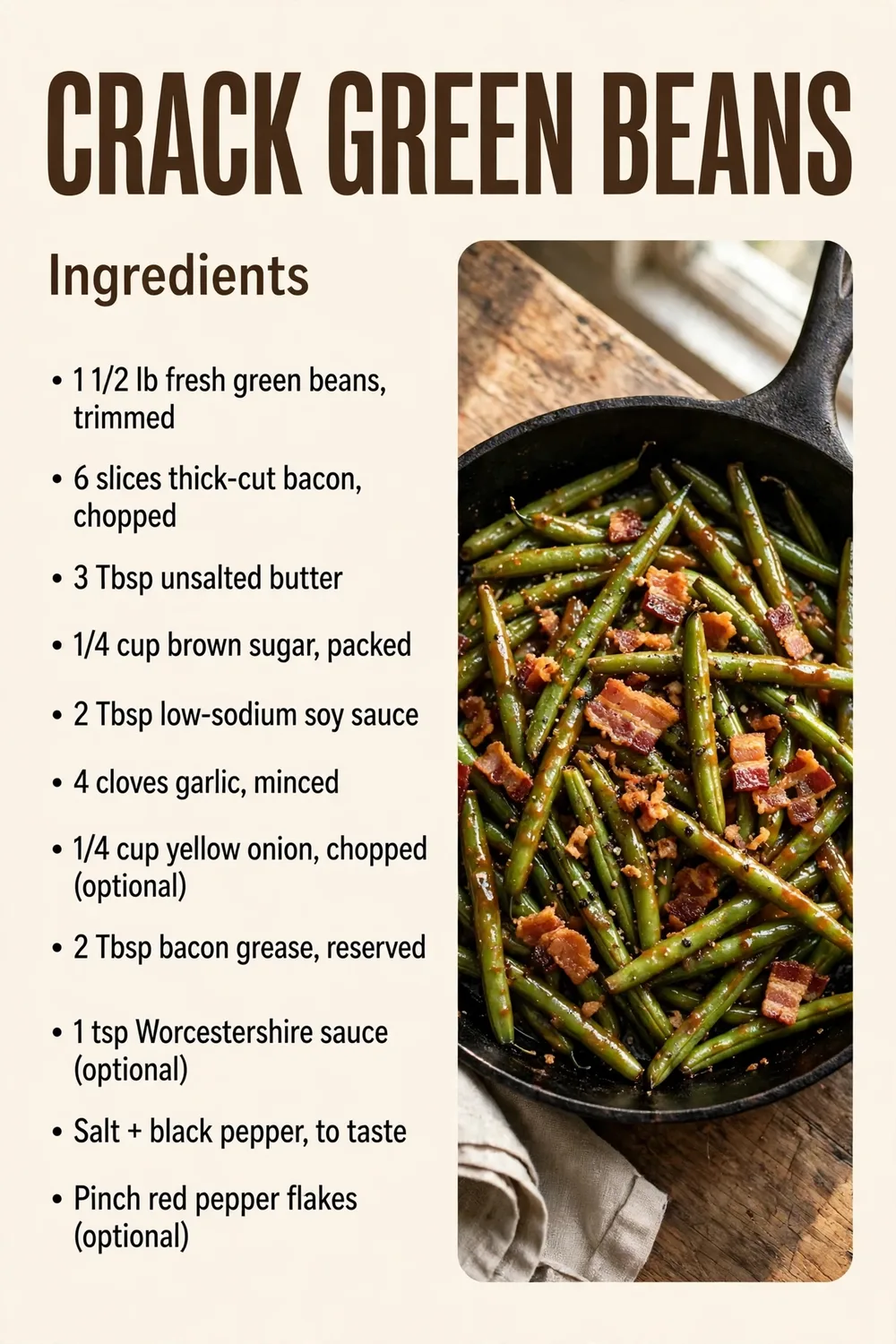
Crack Green Beans (Bacon & Brown Sugar Glaze, 30 Minutes)
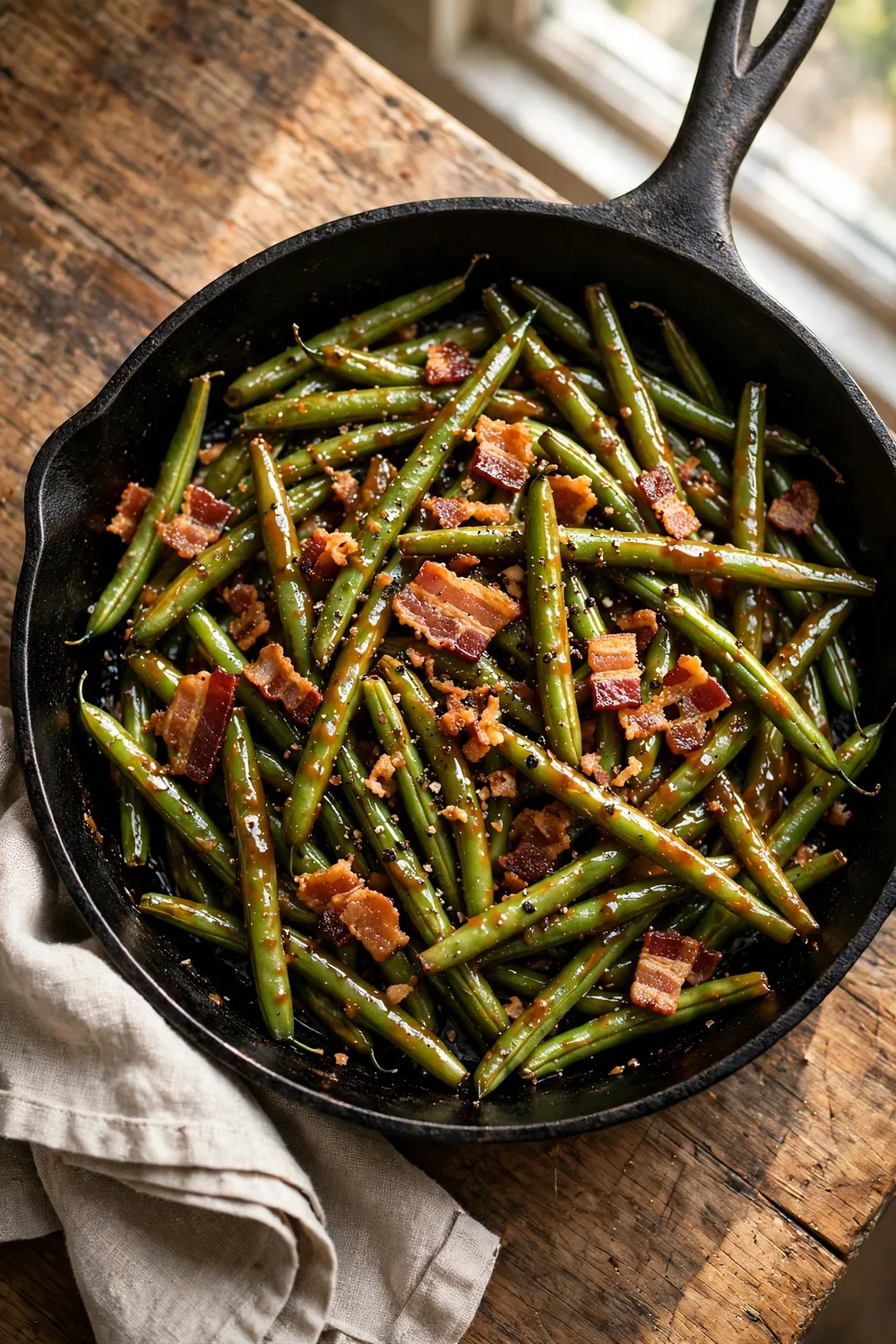
Crack green beans are the side dish that disappears first. Fresh green beans, crispy bacon, and a sweet-savory brown sugar glaze that coats every bean — one skillet, 30 minutes, and a pan that comes back empty. This crack green beans recipe takes the fresh-bean route (tender-crisp, never mushy), keeps the bacon crispy right up to serving, and gives you three methods in one post: stovetop, oven, and slow cooker. If you’ve only ever had the canned version, this one will ruin it for you — in the best way.
Why you’ll love this recipe
- 30 minutes, one skillet. Prep 10, cook 20, done. The glaze builds in the same pan the bacon cooked in.
- The bacon stays crispy. Most recipes stir the bacon back in and let it sit until it goes soft. Ours doesn’t — the hold-out method is below.
- Less sweet than the canned versions. A quarter cup of brown sugar, not a half cup. Sweet, but not candy — and there’s a sweetness scale so you can set it exactly where your family likes it.
- Pantry staples. Brown sugar, soy sauce, butter, garlic. Nothing to buy specially except the beans and the bacon.
- Three methods in one post. Stovetop is the base (30 minutes), but the oven and slow cooker versions are right here with real times.
- A real holiday side that also works on a Tuesday. Thanksgiving table or weeknight chicken — same recipe, same 30 minutes.
Why are they called “crack” green beans?
The name is a Southern potluck joke, and nobody on the first page of Google actually explains it — they all just say “addictive” and move on. So here it is: crack green beans come from the canned-bean church-supper tradition, where green beans, bacon, and brown sugar went into a baking dish and came out so sweet-salty-smoky that people went back for thirds. The glaze is the whole trick. Brown sugar caramelises into the bacon grease, soy sauce adds the salty umami backbone, and the bacon brings the smoke. Sweet, salty, smoky — that combination is why one serving is never enough, and why the dish picked up a nickname it probably doesn’t deserve but absolutely earned.
The name stuck because the beans are genuinely hard to stop eating. This version keeps the same addictive balance but builds it on fresh beans instead of canned, which is why it tastes brighter and less syrupy than the holiday-table original.
Fresh vs canned vs frozen green beans
Every crack green beans recipe on page one picks a side and never explains the choice. Get On My Plate is canned-first. Nora and Cook Craze are fresh-first. Nobody tables all three. Here they are, side by side, so you can pick the one that fits your night.
| Beans | Amount for 6 servings | Prep | Cook time | Texture | Best for |
|---|---|---|---|---|---|
| Fresh (our base) | 1½ lb, trimmed | Wash + trim, 5 min | 6–8 min sauté | Tender-crisp, bright, snappy | Weeknights, and anyone who likes their beans with bite |
| Canned | 3 × 14 oz cans, drained VERY well | Open + drain, 2 min | 10–15 min in the glaze | Soft, nostalgic, holiday-table texture | Thanksgiving, potlucks, the classic version |
| Frozen | 1½ lb, thawed + patted dry | Thaw + pat dry, 10 min | 6–8 min sauté | Close to fresh if dried well; soggy if not | The freezer-stash backup plan |
Fresh — our base
Fresh beans are the better recipe and the better 30-minute fit. They stay tender-crisp, they hold the glaze instead of swimming in it, and they taste like green beans rather than like the can. Trim the stem ends (line them up and cut several at once — the fastest way), pat them dry, and they sauté in 6–8 minutes. If your beans are very thick, give them a splash of water and a lid for 1–2 minutes to soften them through.
Canned — the holiday version
This is the original church-supper version, and it’s still the right call for a holiday table where you want soft, nostalgic beans. Drain the cans very well — this is the single most important step with canned beans, because any liquid left in the can thins the glaze and makes it watery. Use the same glaze amounts, cook the beans in the glaze for 10–15 minutes instead of sautéing, and the bacon goes on top at the end so it stays crisp.
Frozen — thaw + pat dry, or steam + drain
Frozen beans work if you thaw them first and pat them very dry. Straight from frozen they release too much water and the glaze never thickens. Thaw, squeeze gently in a clean towel, then cook exactly like fresh. If you’re in a rush, steam them for 2 minutes and drain well before they hit the pan.
Ingredients
The beans
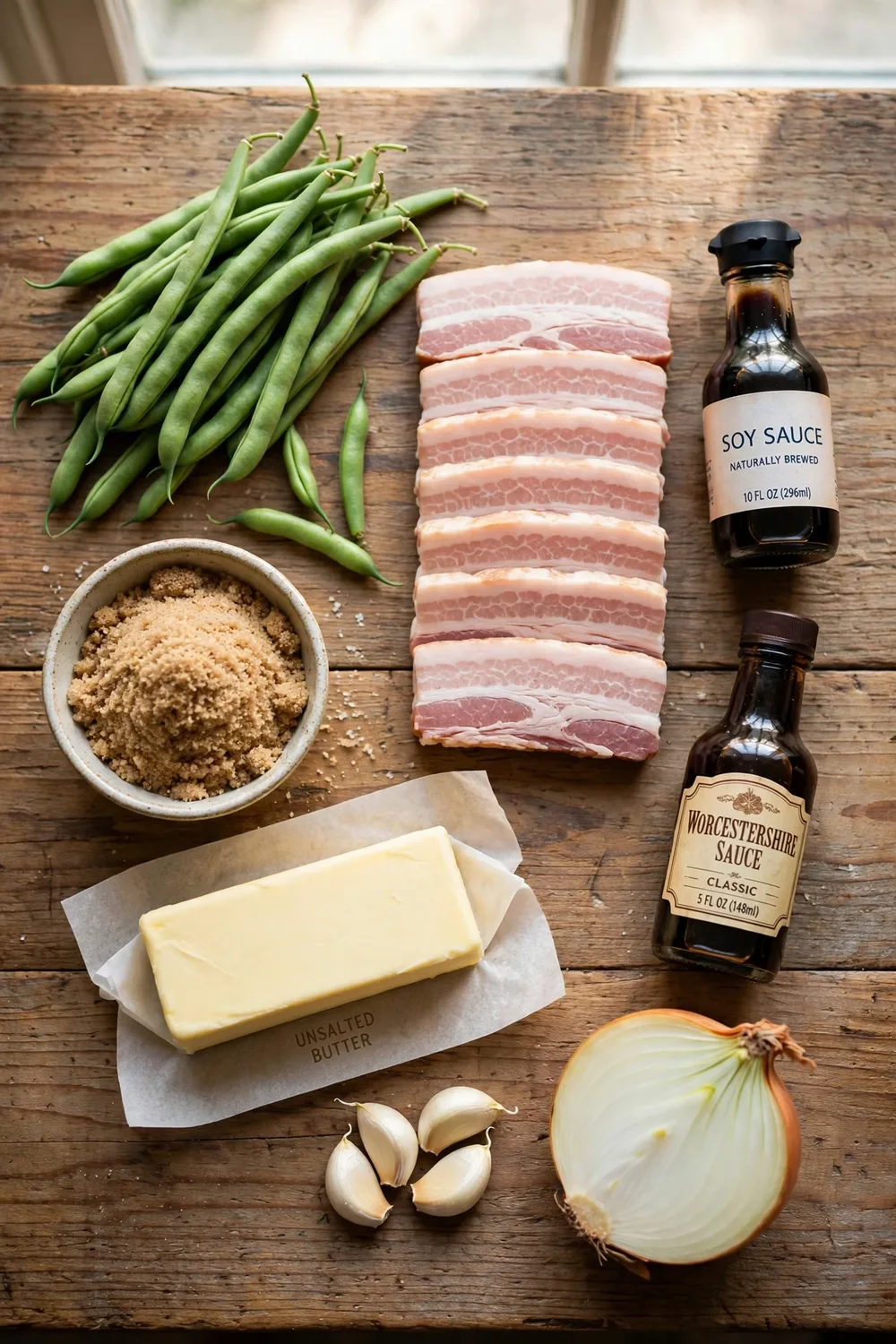
1½ lb fresh green beans, trimmed. That’s about 680g, and it’s the honest amount for 6 servings — a full side, not a garnish. Look for beans that snap cleanly when you bend them; limp or brown-spotted beans will go mushy no matter what you do. Haricots verts (the thin French beans) work too — cut the sauté time to 4–5 minutes.
The bacon
6 slices thick-cut bacon, chopped. Thick-cut matters here: thin bacon renders too fast and shatters into bits. Six slices for 1½ lb of beans is the tested balance — enough smoky flavour in every bite without turning the dish into a bacon delivery system. Cook it low and slow until crisp, then get it out of the pan and onto paper towels. The 2 tablespoons of bacon grease you keep in the pan are the flavour base for everything that follows.
The glaze
3 Tbsp unsalted butter · ¼ cup light brown sugar, packed · 2 Tbsp low-sodium soy sauce · 4 cloves garlic, minced · 1 tsp Worcestershire sauce (optional) · ¼ cup yellow onion, finely chopped (optional) · pinch red pepper flakes (optional). The glaze is butter + brown sugar + soy sauce, built in the bacon grease. Fresh garlic, not garlic powder — Get On My Plate uses powder only, and four fresh cloves are a real flavour upgrade you can taste. Low-sodium soy sauce matters: regular soy plus bacon plus canned beans is how the original lands at 1,320mg of sodium a serving. Ours lands at about 380mg. The onion is optional and melts into the glaze; the Worcestershire is optional too, but it’s the one-teaspoon note that catches the Worcestershire crowd and adds a little tang. Taste before you add any salt — the bacon and the soy have already salted the dish.
How sweet should crack green beans be? The sugar scale
Brown sugar is the most argued-over ingredient in this dish, and the recipes on page one range from a quarter cup to two-thirds of a cup without ever saying how sweet each level actually is. Here’s the scale, tested against the whole SERP:
| Level | Brown sugar | How sweet it tastes | Who it’s for |
|---|---|---|---|
| Less sweet | 3 Tbsp | Gently sweet, savoury-forward | Weeknight dinners, anyone who finds the classic too sweet |
| Classic (ours) | ¼ cup | Sweet and savoury in balance | Most tables, most nights |
| Sweet | ⅓ cup | Clearly sweet, holiday-style | The potluck crowd, kids’ tables |
| Holiday-sweet | ½ cup | Very sweet, almost candied | Get On My Plate’s version — the original church-supper level |
Start at a quarter cup. You can always add another tablespoon at the end, but you can’t take sugar out. Too sweet? A splash of apple cider vinegar — a tablespoon, stirred in off the heat — cuts the sweetness without changing anything else. It’s the one fix only one page on the SERP mentions, and it works.
How to make crack green beans
Step 1 — Trim the beans. Wash the green beans and snap or cut the stem ends. Line them up in a small bundle and cut several at once — the fastest way to trim a pound and a half. Pat them dry; wet beans steam instead of sautéing.
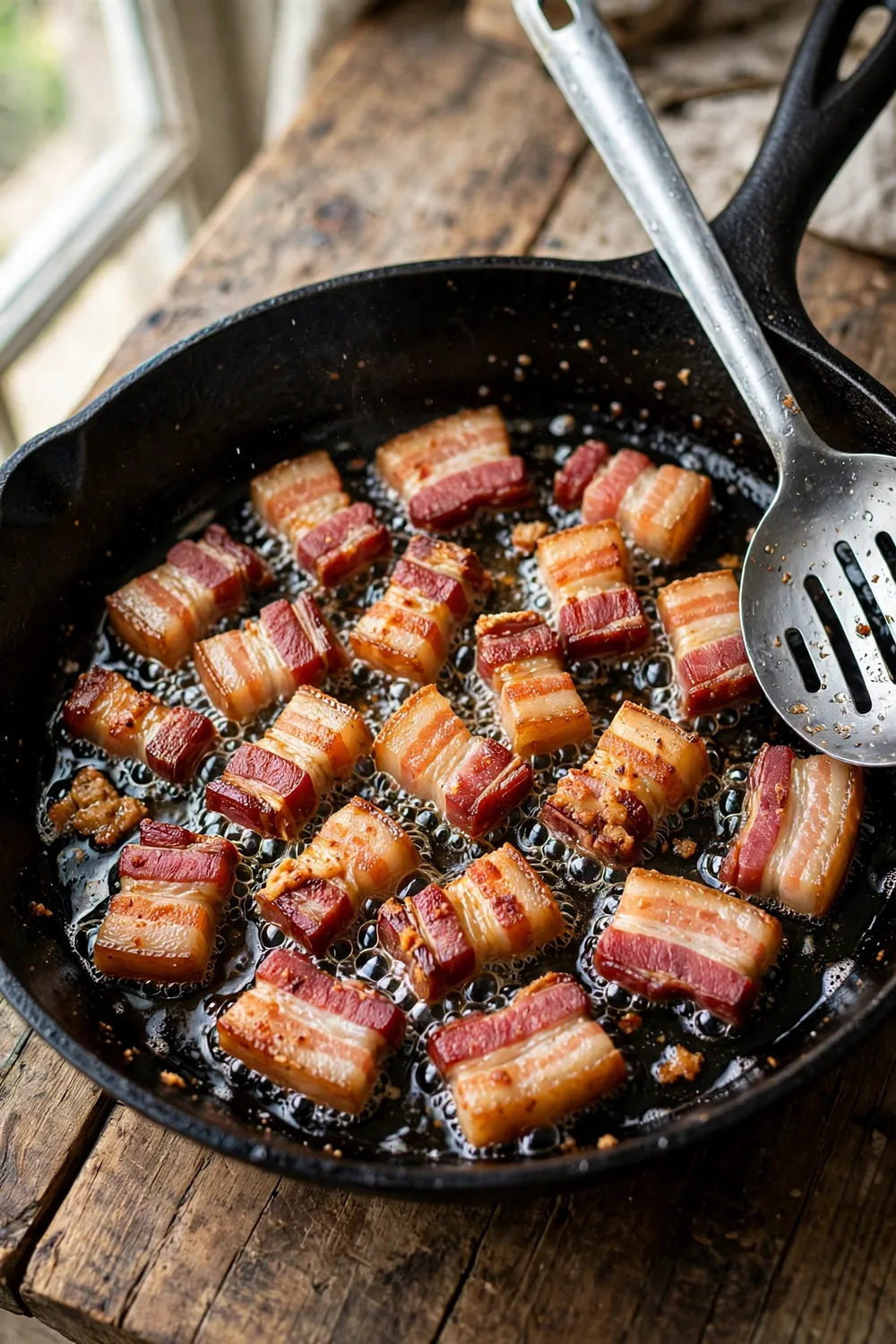
Step 2 — Cook the bacon. Chop the bacon and cook it in a large skillet over medium heat until crisp, 6–8 minutes. Remove it with a slotted spoon to a paper-towel-lined plate. Keep 2 tablespoons of bacon grease in the pan and discard the rest.
Step 3 — Build the base. Add the butter and the onion (if using) to the grease and cook 2 minutes. Add the fresh garlic and cook 30–60 seconds until fragrant — do not brown it. Burnt garlic turns bitter and there’s no fixing it; this is the number-one mistake on the SERP.
Step 4 — Sauté the beans. Add the green beans and toss them in the bacon fat. Sauté 6–8 minutes until bright green and tender-crisp. If your beans are thick or you like them softer, add a splash of water and cover for 1–2 minutes.
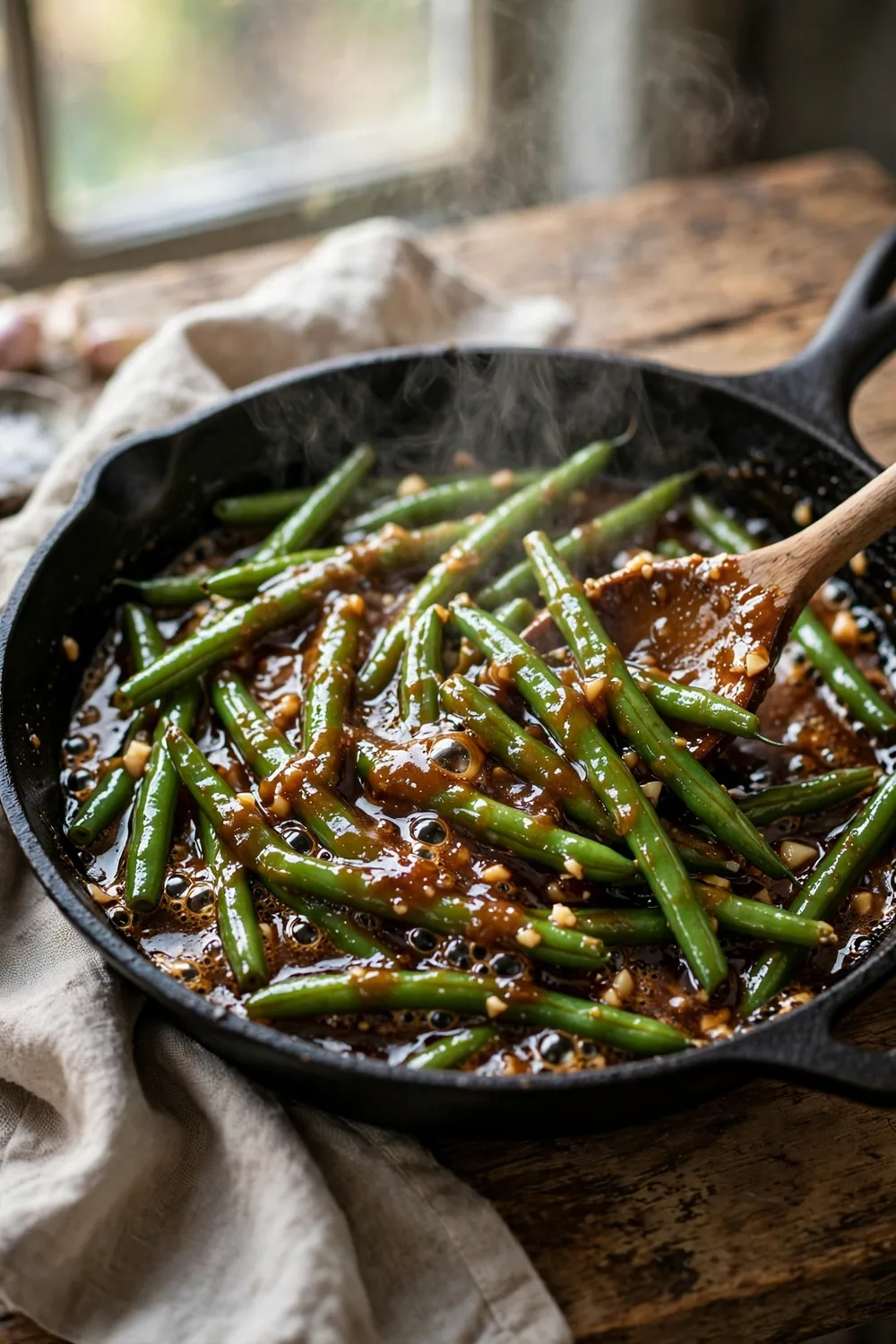
Step 5 — Make the glaze. Add the brown sugar and soy sauce (plus the Worcestershire if using) and stir until the butter melts and the sugar dissolves into a glossy glaze that coats every bean, 2–3 minutes. Don’t rush this step — let it simmer until it thickens slightly so it clings instead of pooling at the bottom of the pan.
Step 6 — Finish. Return the crispy bacon, toss, and cook 1–2 minutes more. Season with salt and pepper and red pepper flakes if using — taste first, the bacon and soy have done most of the salting already. Serve immediately, while it’s hot and glossy.
Kitchen tools
- Large skillet — cast iron is ideal. The glaze needs room to coat the beans, and a crowded pan steams instead of sautéing. A 12-inch skillet is the right size for 1½ lb of beans.
- Slotted spoon. For lifting the bacon out without taking the grease with it.
- Paper towels. For draining the bacon — crispy depends on it.
- 9×13 baking dish. For the oven method.
- Slow cooker. For the crockpot method.
How to keep the bacon crispy
Every recipe on page one stirs the bacon back in and lets it sit — and then it softens. Here’s how to keep it crispy, the section nobody on the SERP writes:
- Hold the bacon out until serving. Cook it, drain it, and leave it on the paper towels until the very last minute. Toss it in, cook 1–2 minutes, serve immediately.
- Never cover the finished dish. A lid traps steam and the bacon goes limp in minutes. Serve uncovered.
- Oven version: broil finish. Two to three minutes under the broiler at the end crisps the bacon back up and caramelises the glaze on top. Watch it — sugar burns fast under a broiler.
- Reheating: skillet, not microwave. A hot skillet with a splash of water or broth brings the beans back and keeps the bacon from going rubbery. The microwave does the opposite.
Common mistakes
- Overcooking the beans. The most common mistake on the SERP, and the one that turns this dish into mush. Fresh beans need 6–8 minutes, not 15. Pull them when they’re bright green and still have bite — they keep cooking in the glaze for another 2–3 minutes.
- Burning the garlic. Fresh garlic goes from fragrant to bitter in under a minute. Thirty to sixty seconds, then the beans go in. If it browns, start that step over — it’s faster than serving bitter beans.
- Too much soy sauce. Two tablespoons is the amount. A quarter cup (Get On My Plate’s amount) is how you land at 1,320mg of sodium and a glaze that tastes like soy, not like brown sugar.
- Not draining canned beans well. If you’re using the canned version, drain the cans until nothing drips. Any liquid left in the can thins the glaze and makes it watery.
- Crowding the pan. A pound and a half of beans in a 10-inch skillet steams instead of sautéing. Use a 12-inch skillet, or cook the beans in two batches.
Troubleshooting
My glaze is too thin / watery. The beans released too much water, or the canned beans weren’t drained well. Fix it the way Get On My Plate does: whisk half a teaspoon of cornstarch into a few tablespoons of cooled sauce, stir it back into the pan, and cook 5 minutes until it thickens. Next time, pat the beans drier and let the glaze simmer a full 2–3 minutes before the bacon goes back in.
My beans are soggy. They cooked too long, or the pan was crowded and they steamed. There’s no un-cooking them — but a quick toss in a ripping-hot dry skillet for 60 seconds firms the outside up, and the crispy bacon on top distracts from the rest. Next time, 6–8 minutes, 12-inch skillet, no lid.
My glaze is too sweet. Stir in a tablespoon of apple cider vinegar off the heat. It cuts the sweetness without changing the flavour profile. Next time, drop to 3 tablespoons of sugar — the “less sweet” level on the scale above.
My glaze is too salty. A squeeze of lemon juice or another tablespoon of butter helps, but the real fix is prevention: low-sodium soy sauce, and taste before adding any salt. Bacon and soy have already salted the dish.
My bacon went soft. It went back in too early and sat in the glaze. Hold it out until serving next time, and reheat leftovers in a skillet — the microwave is what kills it. For the oven version, a 2–3 minute broil finish brings it back.
My beans are unevenly cooked. Some tender, some raw — usually thick and thin beans mixed together, or a crowded pan where the beans on the bottom cooked and the ones on top didn’t. Sort the beans by thickness when you trim them, and toss every 2 minutes while they sauté.
Three ways to cook them: stovetop, oven & slow cooker
Stovetop — the base, 30 minutes
The recipe above. One skillet, 30 minutes total, fresh beans. This is the fastest version and the one with the best texture — tender-crisp beans, glossy glaze, crispy bacon.
Oven — 350°F, 9×13 dish, 20–25 minutes
The holiday version, and the one that matches the canned-bean tradition. Preheat to 350°F. Cook the bacon first (same as stovetop), then combine everything — beans (canned, drained well, or fresh beans blanched 2–3 minutes), glaze ingredients, bacon — in a 9×13 baking dish. Bake uncovered 20–25 minutes until the glaze is bubbling and the beans are tender. For extra-crispy bacon on top, broil 2–3 minutes at the end and watch it constantly. This is the version for a holiday table where the oven is already on and the stovetop is full.
Slow cooker — low 4–5 hours / high 2–3 hours
Get On My Plate owns the number-one spot on the whole crockpot cluster with a card note and no real slow-cooker section — this is the open lane. Cook the bacon first (always — raw bacon in a slow cooker goes rubbery), then put everything except the bacon in the slow cooker: beans, butter, sugar, soy sauce, garlic, Worcestershire. Cook on low 4–5 hours or high 2–3 hours. Stir the bacon in during the last 15 minutes so it stays crisp. If you’re keeping it warm for a potluck, leave the lid slightly ajar — a sealed lid steams the bacon soft. Fresh beans hold up better than canned in the slow cooker; canned beans go very soft after 4 hours.
Variations
Spicy
Add a pinch of red pepper flakes with the garlic, or a teaspoon of sriracha stirred into the glaze. A sliced jalapeño sautéed with the onion is the fresh-heat version.
Cheesy
Stir in a quarter cup of grated Parmesan at the end and broil 1–2 minutes until it melts and browns in spots. The salty cheese against the sweet glaze is the combination that makes people ask for the recipe.
Honey garlic
Swap half the brown sugar for honey (2 tablespoons honey + 2 tablespoons brown sugar) and add an extra teaspoon of minced garlic. The honey makes the glaze glossier and a little less caramelly.
Ketchup version
The All Things Mamma twist, and the only ketchup version on page one: add half a cup of ketchup to the glaze. It adds tang and tomato sweetness and makes the glaze thicker and redder. Reduce the brown sugar to 3 tablespoons so it doesn’t go too sweet.
Southern style
Add the Worcestershire (1 tablespoon this time, not 1 teaspoon) plus a pinch of cayenne. This is the version closest to the original church-supper dish — darker, smokier, with a little heat at the back.
Maple
Swap the brown sugar for a quarter cup of maple syrup and add a pinch of red pepper flakes. The maple version is less caramelly and more woodsy — good with ham.
Vegetarian / vegan
Skip the bacon and use 2 tablespoons of olive oil instead of bacon grease, plus 1 teaspoon of smoked paprika and a few drops of liquid smoke for the smoky note. Crispy fried shallots on top replace the bacon crunch. Use vegan butter and the dish is fully vegan.
With almonds or walnuts
Toast a quarter cup of sliced almonds or chopped walnuts in the dry skillet before you start, and scatter them over the finished dish. The crunch is the point — and it’s the version that works when someone at the table doesn’t eat bacon but still wants texture.
What to serve with crack green beans
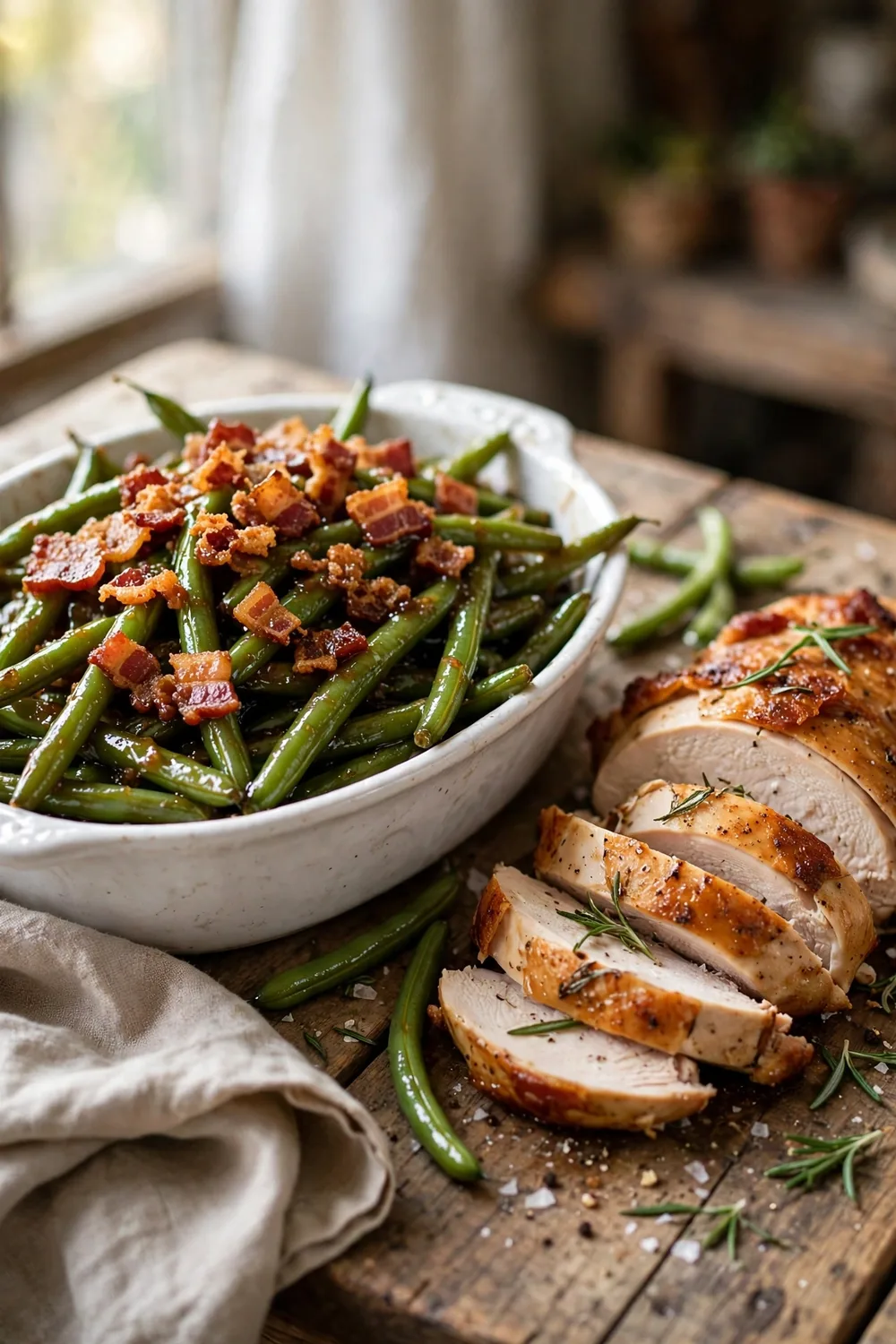
Weeknight mains
This is a 30-minute side, so it belongs next to 30-minute mains. Honey Garlic Chicken Thighs — sticky, garlicky, one pan, and the glaze on the beans plays well with the honey garlic sauce. Crockpot Chicken Tacos — the beans are the green thing on a taco-night plate. Gigi Hadid Pasta — creamy, spicy pasta next to sweet-savoury beans is the comfort-food plate that needs no further argument.
Holiday mains
Roast turkey, glazed ham, prime rib, pot roast — the classic holiday table, and the reason this dish exists. The beans sit next to the Cheeseburger Soup on a cold night and next to Baked Ziti when the table is full of people who came hungry.
Comfort pairings
Mashed potatoes, mac and cheese, cornbread. The beans are the sweet-savoury counterpoint to anything rich and starchy — that’s the job they’ve done at Southern tables for decades.
Make ahead, storage & freezing
Thanksgiving-day timeline. Day before: cook the bacon, trim the beans, and mix the glaze ingredients (butter, sugar, soy, garlic, Worcestershire) in a jar. Store the bacon separately from the beans so it stays crisp. Day of: the whole dish takes 30 minutes — sauté the beans, build the glaze, toss the bacon in, serve. Nothing about this dish needs to be made hours ahead, which is the point of a 30-minute side.
Fridge. Leftovers keep 4 days in an airtight container. Reheat in a skillet over medium heat with a splash of water or broth — the glaze loosens back up and the beans warm through without going mushy. The microwave works in a pinch but softens the bacon.
Do NOT freeze the finished dish. Cook Craze and Fervent Mama both say it plainly, and they’re right: frozen and thawed, the beans go mushy and the glaze separates into a watery layer and a sugary one. If you need to prep far ahead, freeze the cooked bacon separately (up to 2 months) and make the beans fresh on the day.
How much to make: scaling for a crowd
| Servings | Green beans | Bacon | Butter | Brown sugar | Soy sauce | Pan size |
|---|---|---|---|---|---|---|
| 4 | 1 lb | 4 slices | 2 Tbsp | 3 Tbsp | 1½ Tbsp | 10-inch skillet |
| 6 (base) | 1½ lb | 6 slices | 3 Tbsp | ¼ cup | 2 Tbsp | 12-inch skillet |
| 8 | 2 lb | 8 slices | 4 Tbsp | ⅓ cup | 3 Tbsp | 12-inch skillet or 9×13 (oven) |
| 12 | 3 lb | 12 slices | 6 Tbsp | ½ cup | ¼ cup | Two skillets, or 9×13 + a skillet (oven) |
For 12, cook the bacon in two batches and the beans in two batches — a crowded pan steams instead of sautéing, and 3 lb of beans in one skillet is a crowd. The oven method scales best for a crowd: one 9×13 holds the 8-serving amount, and two dishes hold 12.
FAQ
What are crack green beans?
Crack green beans are green beans cooked with crispy bacon and a sweet-savoury brown sugar glaze — butter, brown sugar, soy sauce, and garlic, built in the bacon grease. The dish comes from the Southern church-supper tradition, where canned beans, bacon, and brown sugar went into a baking dish and came out so craveable that people went back for thirds.
Why are they called “crack” green beans?
Because of the sweet-salty-smoky balance. Brown sugar caramelises into the bacon grease, soy sauce adds the salty umami backbone, and the bacon brings the smoke — that combination is why one serving is never enough. The nickname is a potluck joke about how addictive the glaze is, not a reference to anything else.
Can I use canned green beans instead of fresh?
Yes — it’s the original version. Use 3 × 14 oz cans, drained very well (any liquid left in the can thins the glaze), and cook the beans in the glaze for 10–15 minutes instead of sautéing. The texture is softer and more nostalgic than fresh. The comparison table above has the exact amounts and times for all three bean types.
Can I use frozen green beans?
Yes, if you thaw them first and pat them very dry. Straight from frozen they release too much water and the glaze never thickens. Thaw, squeeze gently in a clean towel, then cook exactly like fresh. In a rush, steam them for 2 minutes and drain well first.
Can I make crack green beans ahead of time?
Yes — a day ahead is the sweet spot. Cook the bacon and trim the beans the day before, and mix the glaze ingredients in a jar. Store the bacon separately so it stays crisp. On the day, the dish takes 30 minutes from pan to table. Don’t make the finished dish days ahead — the beans go soft and the bacon goes limp.
How do I keep the bacon crispy?
Hold it out until serving. Cook it, drain it on paper towels, and leave it there until the last minute — toss it in, cook 1–2 minutes, serve immediately. Never cover the finished dish (a lid traps steam and softens the bacon), and reheat leftovers in a skillet, not the microwave. For the oven version, a 2–3 minute broil finish crisps it back up.
How do I keep the green beans from getting soggy?
Three things: don’t overcook them (6–8 minutes for fresh beans, not 15), don’t crowd the pan (a 12-inch skillet for 1½ lb), and pat the beans dry before they go in. Wet beans steam; dry beans sauté. If you’re using canned beans, drain them until nothing drips.
How do I make crack green beans less sweet?
Drop the brown sugar to 3 tablespoons (the “less sweet” level on the scale above), and if a batch still comes out too sweet, stir in a tablespoon of apple cider vinegar off the heat — it cuts the sweetness without changing the flavour. Use light brown sugar rather than dark, which tastes sweeter.
Can I make crack green beans in the oven / slow cooker?
Yes, both — the full methods are in the “Three ways” section above. Oven: 350°F, 9×13 dish, 20–25 minutes, uncovered, with a broil finish for crispy bacon. Slow cooker: low 4–5 hours or high 2–3 hours, bacon stirred in for the last 15 minutes, lid slightly ajar if you’re keeping it warm.
Can I make crack green beans vegetarian or gluten-free?
Vegetarian: skip the bacon, use 2 tablespoons of olive oil instead of bacon grease, and add 1 teaspoon of smoked paprika plus a few drops of liquid smoke for the smoky note — crispy fried shallots on top replace the bacon crunch. Vegan: same, with vegan butter. Gluten-free: the only gluten risk is the soy sauce — swap it for tamari or coconut aminos and the dish is gluten-free.
Conclusion
Crack green beans are fresh beans, crispy bacon, and a sweet-savory brown sugar glaze, done in 30 minutes in one skillet. Put them on the table this week — they go with everything.
More easy dinners
- Honey Garlic Chicken Thighs — sticky, garlicky, one pan, 30 minutes.
- Crockpot Chicken Tacos — 3 ingredients, slow cooker, shreds with two forks.
- Gigi Hadid Pasta — the viral spicy vodka pasta, shells, tomato paste, cream and Parmesan.
- Cheeseburger Soup — one pot, 45 minutes, real cheddar, no Velveeta.
- Baked Ziti — Italian sausage, three cheeses, never dry.
Ingredients
Equipment
Method
- Wash and trim the beans; pat dry.
- Cook the chopped bacon in a large skillet over medium heat until crisp, 6–8 min; remove to a paper-towel-lined plate; keep 2 Tbsp bacon grease in the pan.
- Add butter + onion (if using) to the grease, cook 2 min; add garlic, cook 30–60 sec until fragrant — do not brown.
- Add the beans; toss in the bacon fat and sauté 6–8 min until bright green and tender-crisp.
- Add brown sugar + soy sauce (+ Worcestershire if using); stir until the butter melts and the sugar dissolves into a glossy glaze, 2–3 min.
- Return the crispy bacon; toss, cook 1–2 min more; season with salt + pepper + red pepper flakes if using. Serve immediately.
Nutrition information
| Calories | ~190 kcal |
| Protein | ~6g |
| Carbohydrates | ~19g |
| of which sugars | ~10g |
| Fat | ~11g |
| of which saturates | ~5g |
| Sodium | ~380mg |
| Cholesterol | ~20mg |
| Fiber | ~3g |
Per serving = 1 of 6. Nutrition is an estimate calculated from USDA FoodData Central values for the exact ingredients listed. Values will vary with brands and substitutions.
How our numbers compare (per serving): All Things Mamma 134 kcal · Meals By Nora 180 kcal · Cook Craze 185 kcal · ours ~190 kcal · Get On My Plate 224 kcal · Everyday Family Cooking 440 kcal* (*their per-serving math doesn’t add up for the stated ingredients — 8 oz bacon + 1½ lb beans is 4+ servings, not 2). Ours is lighter than Get On My Plate’s because we use ¼ cup sugar (not ½ cup) and 2 Tbsp soy sauce (not ¼ cup), and fresh beans instead of canned.
Pin this recipe
Love this recipe? Pin one of these to save it for later.